





































LILITH at kim? EDEN 2026
Curated by Zane Onckule
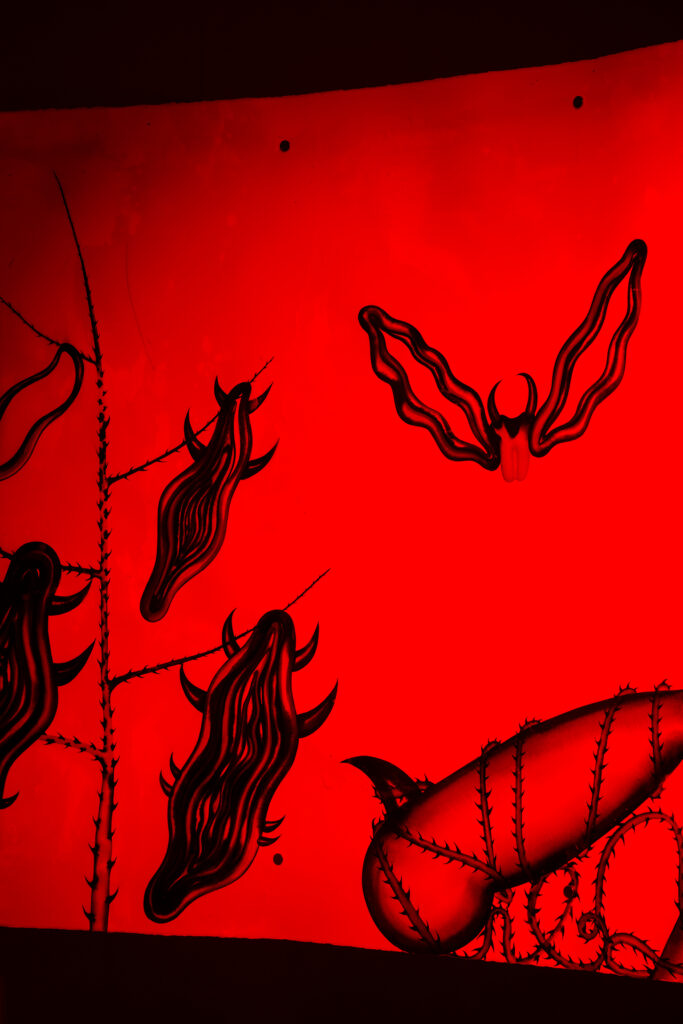
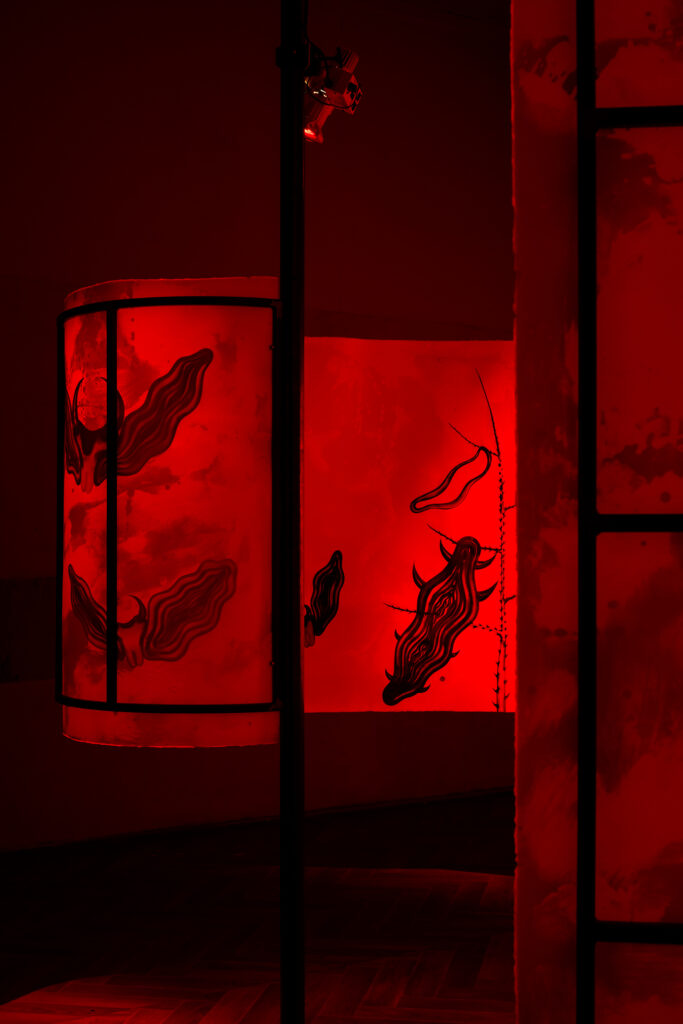
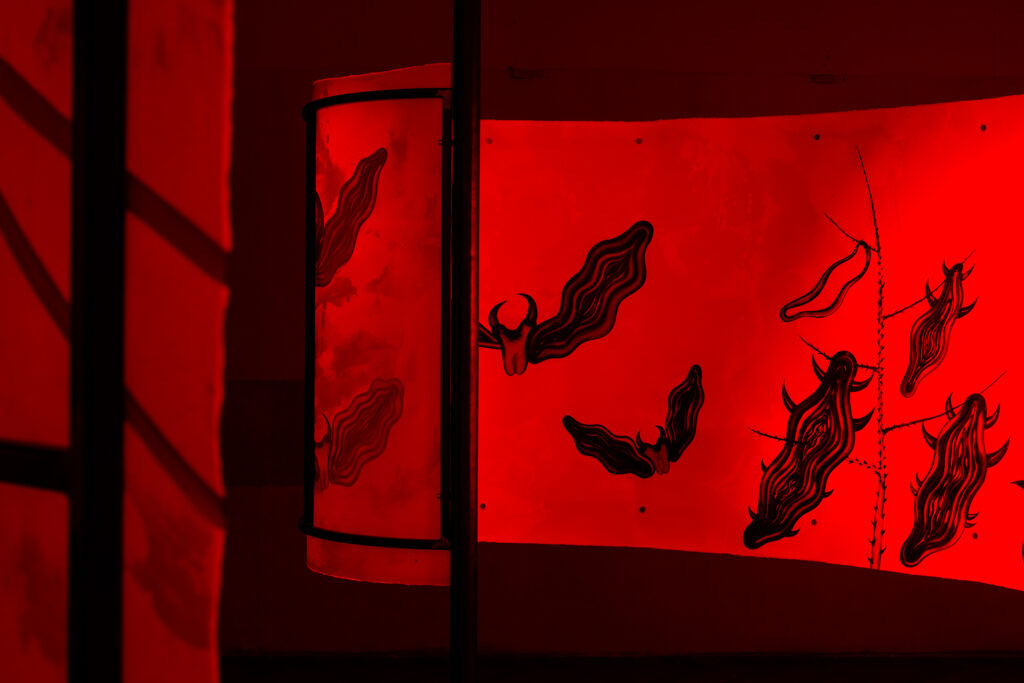
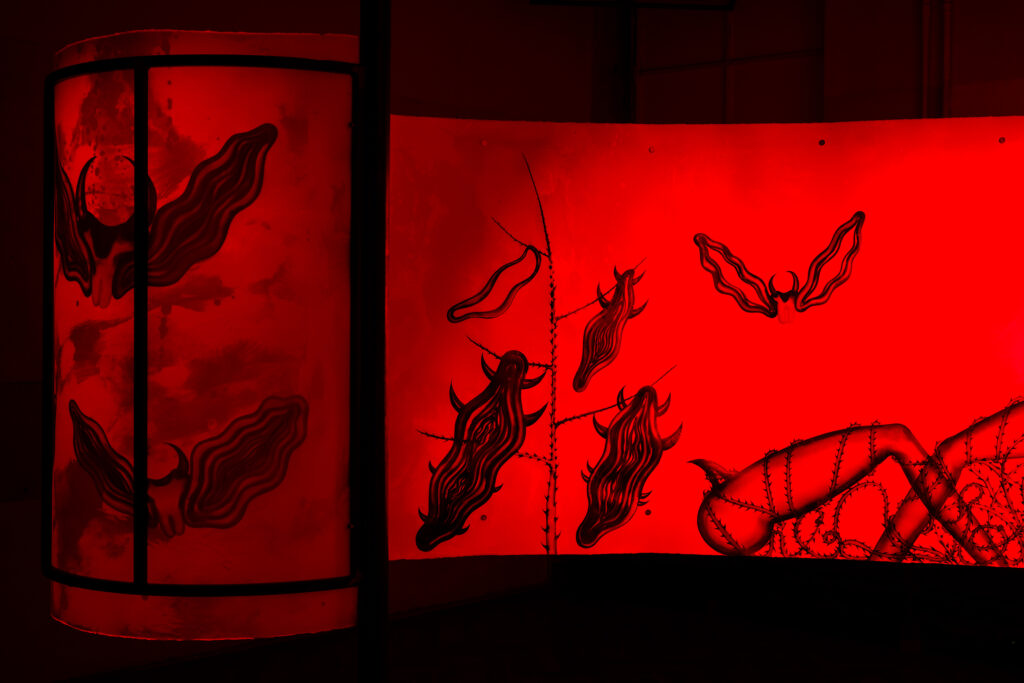
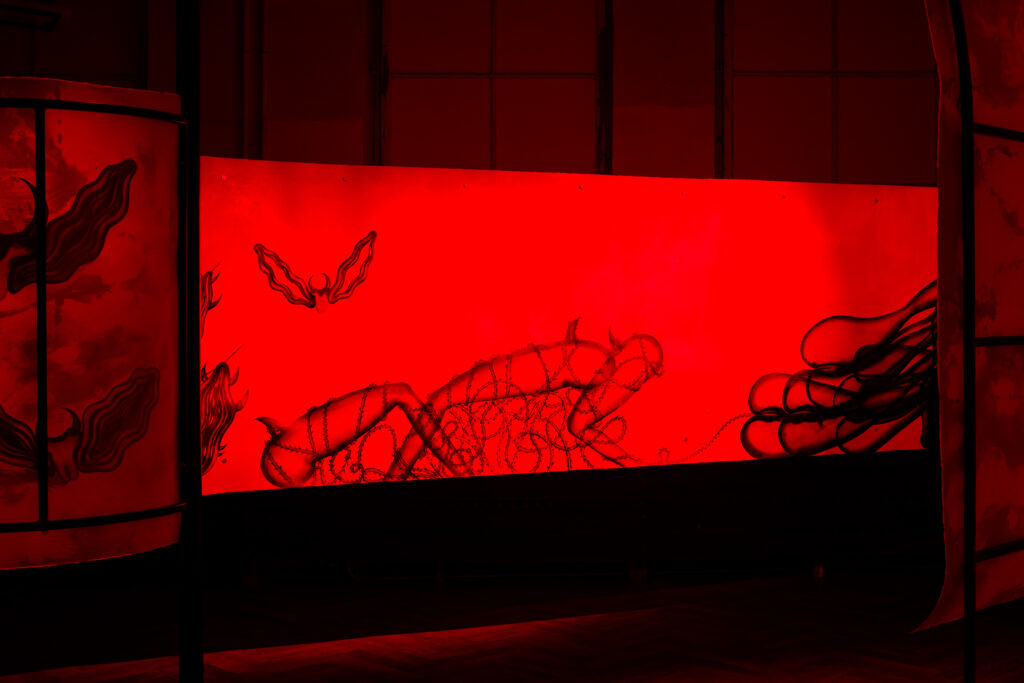
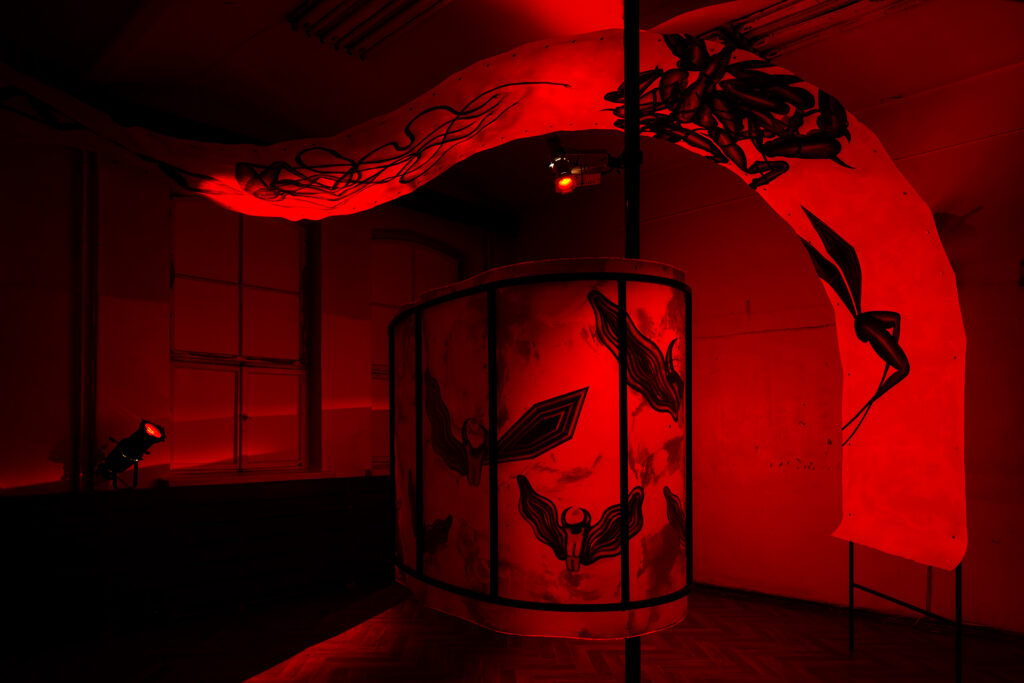
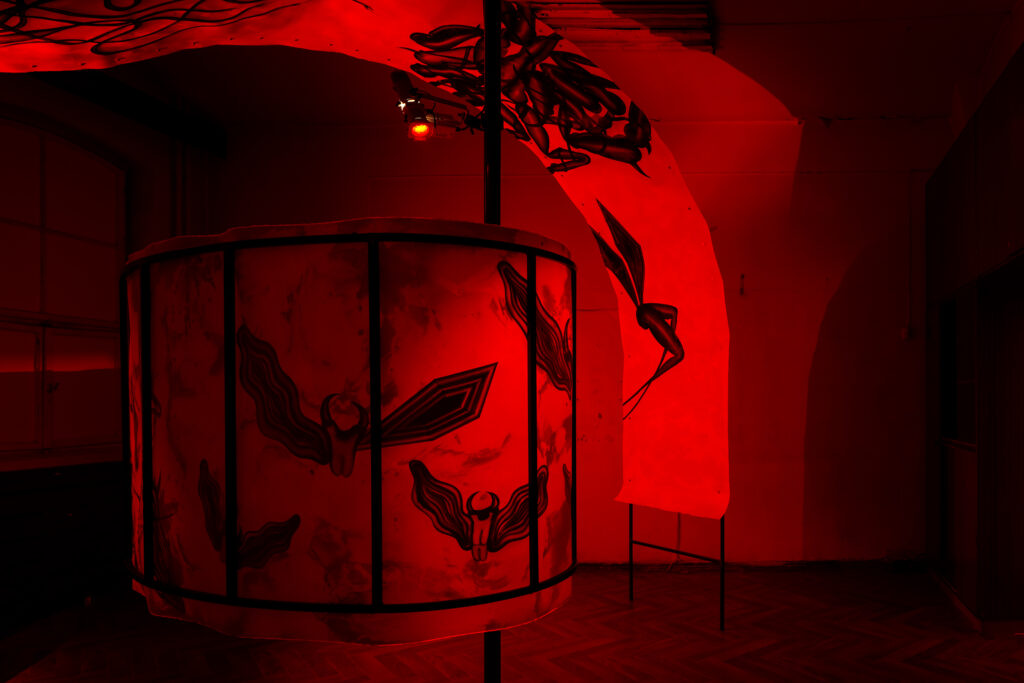
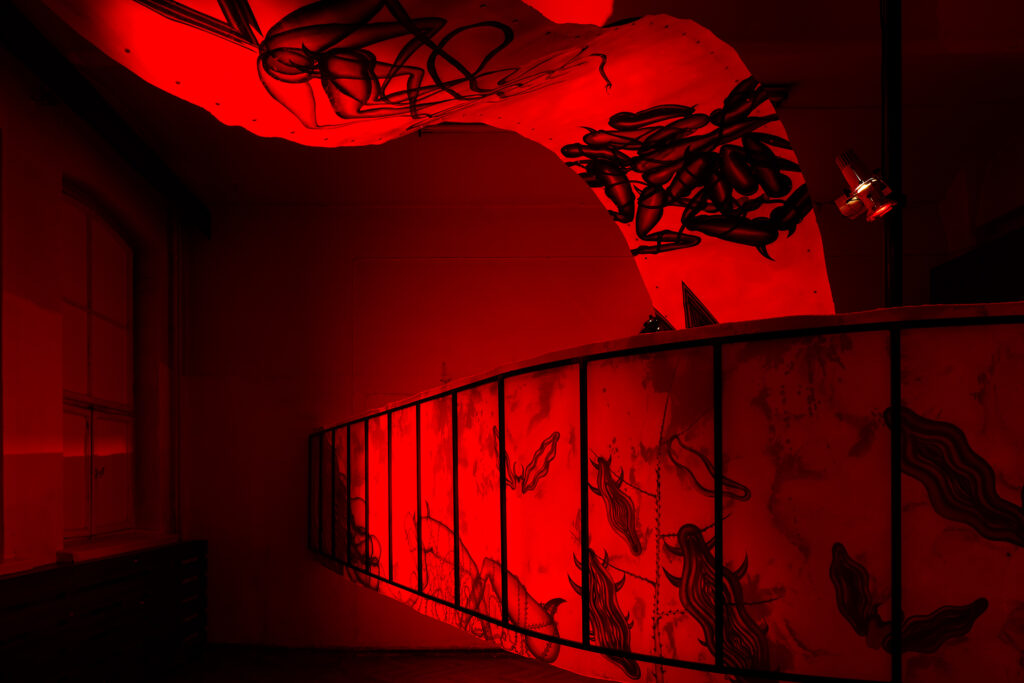
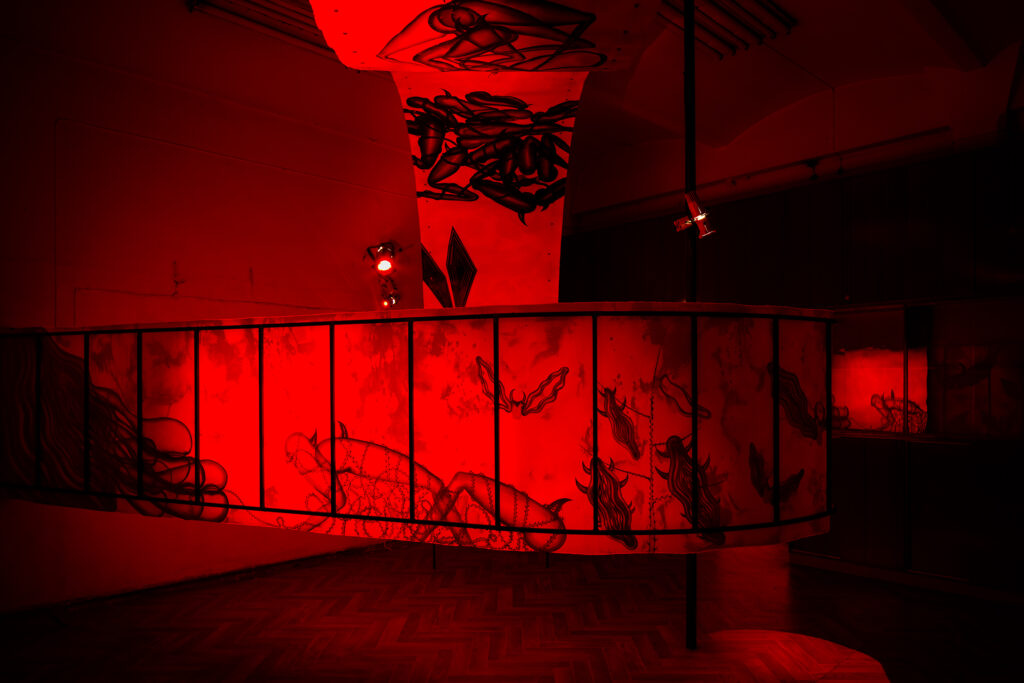
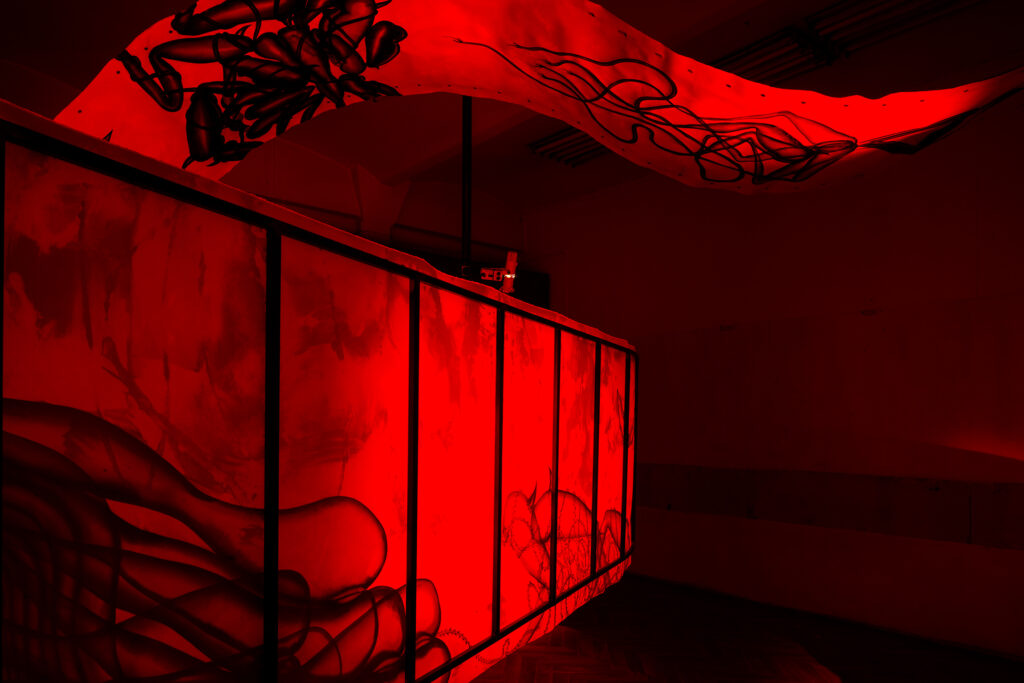
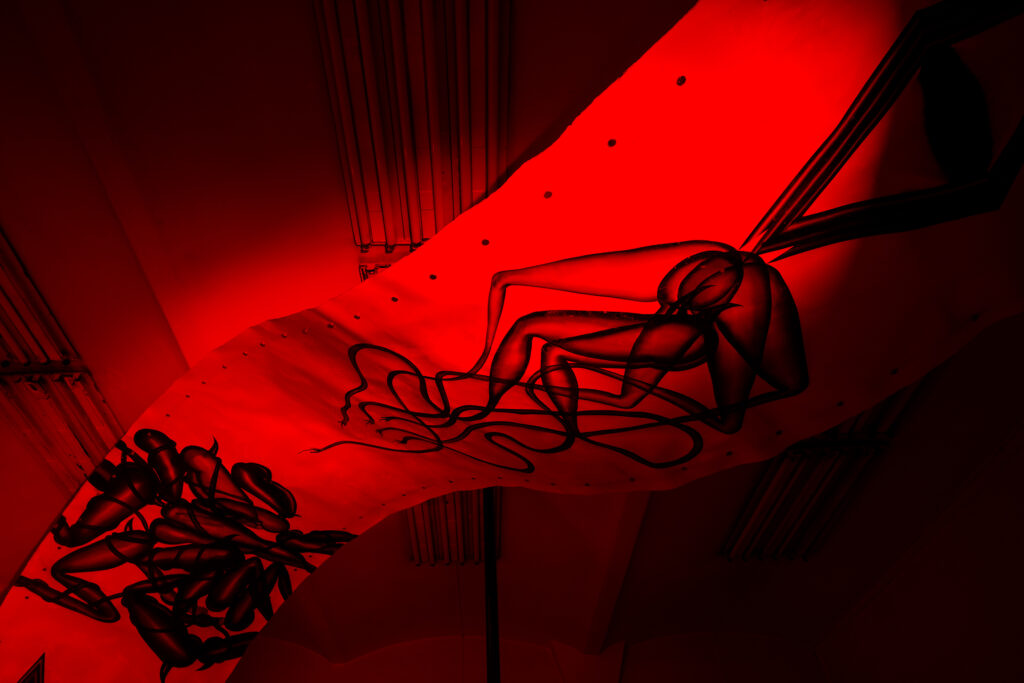
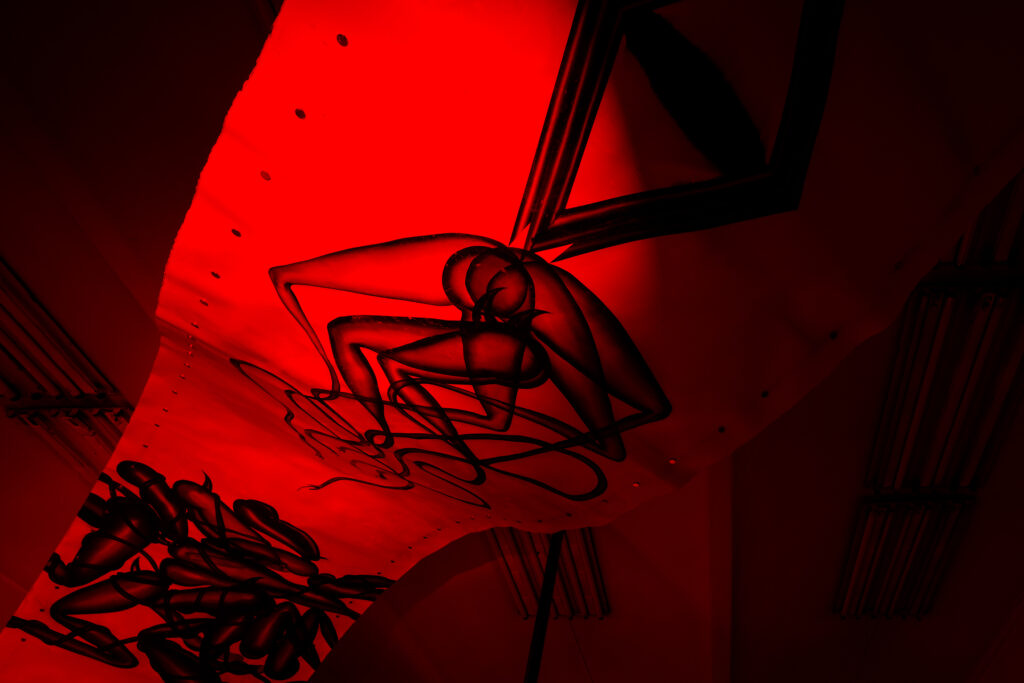
Sabīne Vernere’s Lilith, created for EDEN, unfolds as an abstract, materially
driven installation in which technique and image are inseparable. It centres
on wax-impregnated paper whose semi-translucent surface absorbs and
releases pigment, producing drips, stains and fluid traces that evoke wetness
and corporeal immediacy. This permeable field is counterbalanced by a rigid
metal framework that both contains and structures the image.
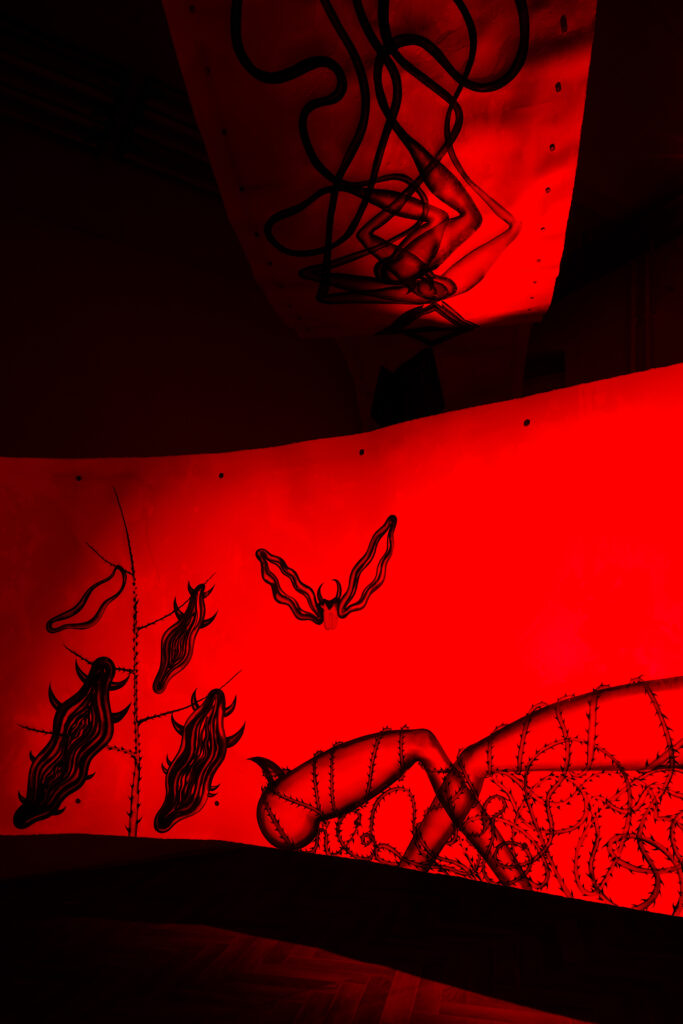
Lilith is organised along two intersecting axes: a horizontal register near the
ceiling and a descending vertical axis. Together, they articulate a movement
from containment toward transformation. The upper zone, aligned with Eden,
evokes a controlled and coded environment shaped by patriarchal authority.
Here, fragmented bodily signs, phallic forms and serpent motifs construct a
visual language of hierarchy, tension and censorship. Within this system,
Lilith itself – mythically seen as Adam’s first wife, created from the same
dust – appears as the sole female presence. Her refusal to submit to Adam’s
dominance, most explicitly her refusal to lie beneath him during sex,
becomes the rupture that precipitates her departure from Eden and establishes
the work’s central gesture of autonomy.
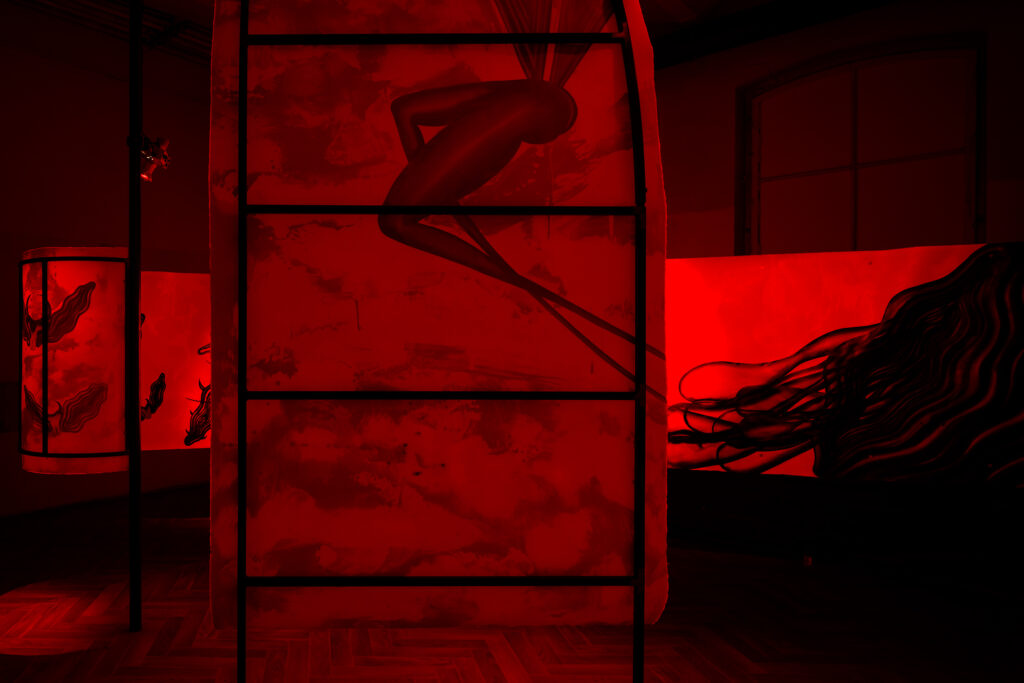
In Vernere’s artistic reading, this break is spatially and conceptually
articulated in the shift from horizontal to vertical. A ladder-like structure that
takes up an entire room concentrates Lilith’s assertion of equality, grounded
in shared origins and enacted as an act of will, suggesting ascent, tension and
flight. In this lower zone, bodily autonomy emerges through expansive forms
and motifs of sexuality, including vulvar imagery, organic textures, and
thorn-like elements interwoven with demonic references. Light passing
through waxed surfaces reveals layered figures and reversed images, while
shifting illumination and the viewers’ shadows activate the installation,
merging bodily presence in space with the depicted forms.
Through material process, spatial construction, and mythic reference, Vernere
reconfigures Lilith as a figure of autonomous sexuality and resistance. Her
departure from Eden becomes not an act of exile but an assertion of agency,
in which the body generates and insists upon its own order.
Text by Zane Onckule